
Hello,
As we are approaching the end of April, the garden is moving from its crops of daffodils, bluebells and tulips to the lilies and irises. All these plants have something in common: their leaves are long and thick, with parallel veining.
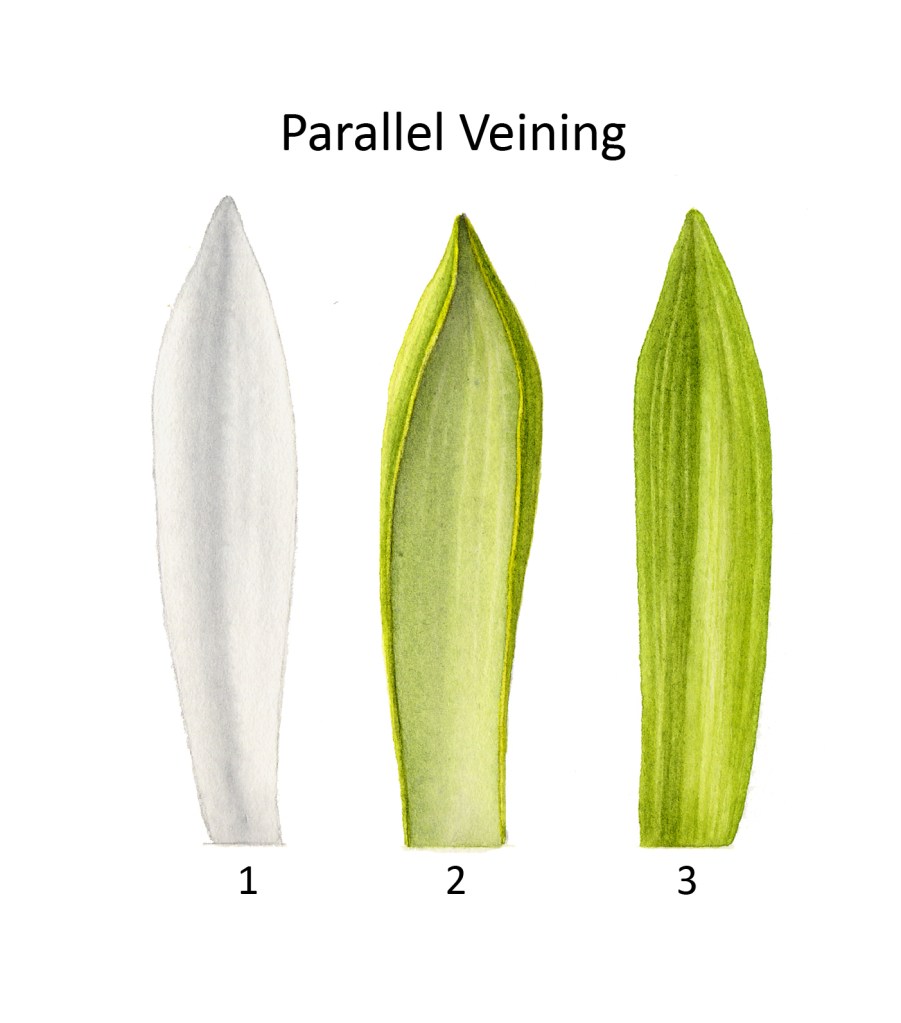
Parallel veining means that all veins run from base to tip, with no side veins branching out of the central vein. Although it is called parallel, it is not actually parallel. Parallel lines never touch. Parallel veins do touch at the tip, and in some cases also at the base. But they do run more or less parallel to each other if you don’t look too closely, and although they touch in places where the leaf gets narrower, they never cross.
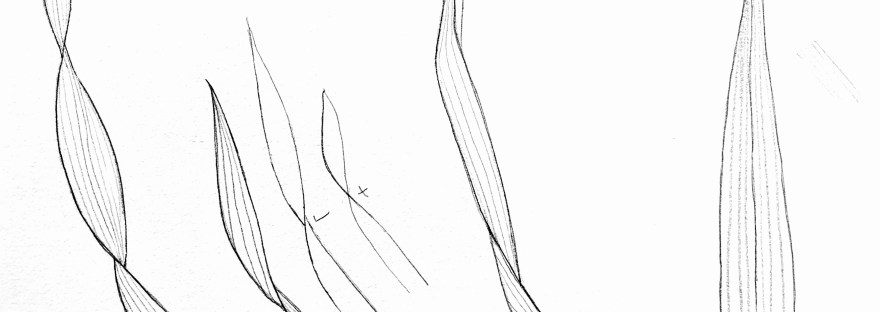
In this video I am showing how to draw these leaves and also how to draw these pesky twisting leaves. One mistake I see a lot is portraying the intersection as a perfect cross. This would be true if the leaf was two-dimensional. But every leaf has a thickness, thus being three-dimensional. This thickness needs to be shown, so the cross isn’t a perfect cross. It has a bit more added on the topside and on the underside. This tends to be especially true for these long leaves with parallel veining because they are usually thick, fleshy leaves, with more thickness than most foliage.
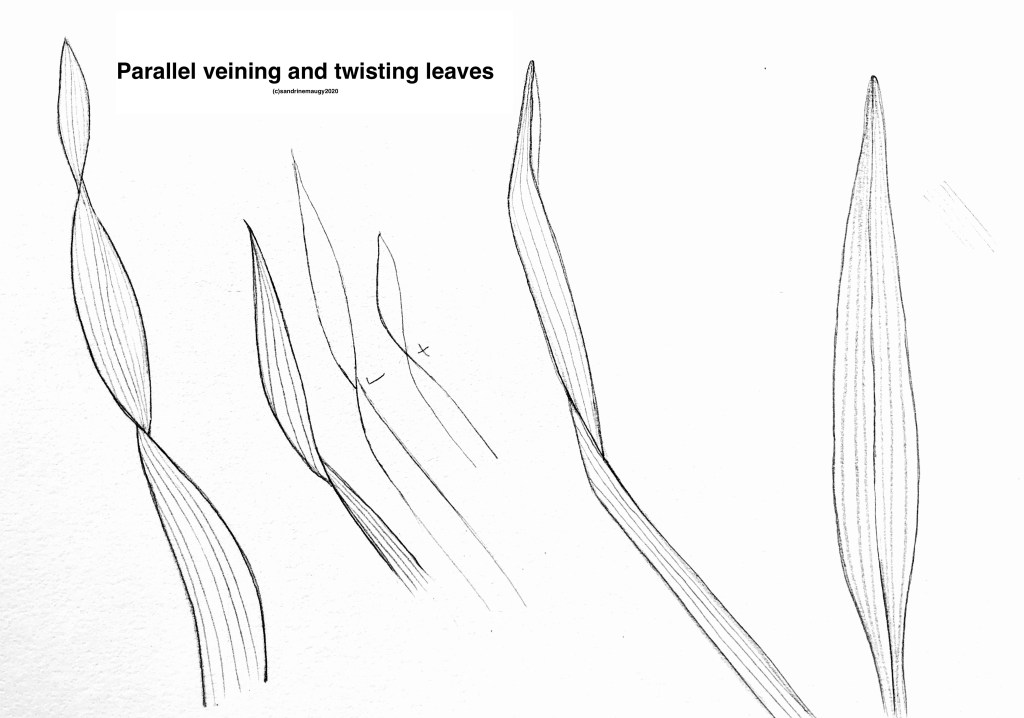
Here is the video tutorial:
The sketchbook I am using in the tutorial is an Etcher sketchbook. It is called “The every day sketchbook”. I like it because you can paint on the cloth cover to customise it. Please click here if you want to have a look at it on the Jackson’s website. (Affiliated link).
See you soon and happy drawing!
Sandrine


